A Look Inside America's Digital Divide: Washington, VA & Washington, DC

Joshua Shorter • March 28, 2024

When we looked into the mobile experience of each city to find indicators of a digital divide, we saw that Washington, DC had an average of 40% poor or no signal readings while Washington, VA, had an average of 71%. 


If we look solely at the percentage of no signal readings in both cities, we see that in Washington, VA there is an average of 10% no signal readings while it's only 1% in Washington, DC. The likelihood of having no signal is 10X higher in Washington, VA than it is in Washington, DC.

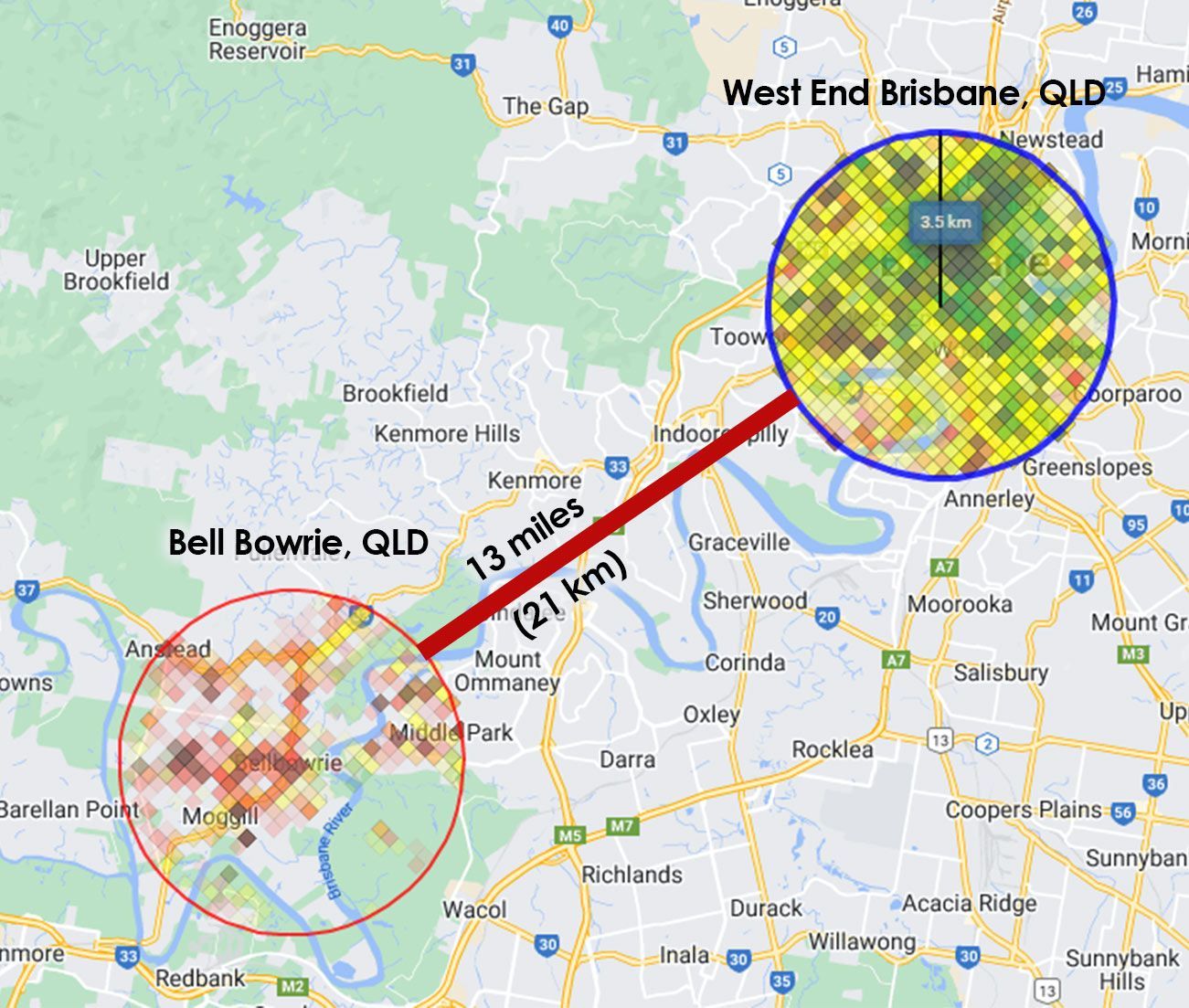
The distance between these two cities is only 69 miles (111 kilometers) but in Washington, VA there are almost 2X more poor signals (as a percentage of total signals) than there are in Washington, DC. 


More About The Network Cell Info Community

Millions of app users globally have contributed trillions of network performance measurements.
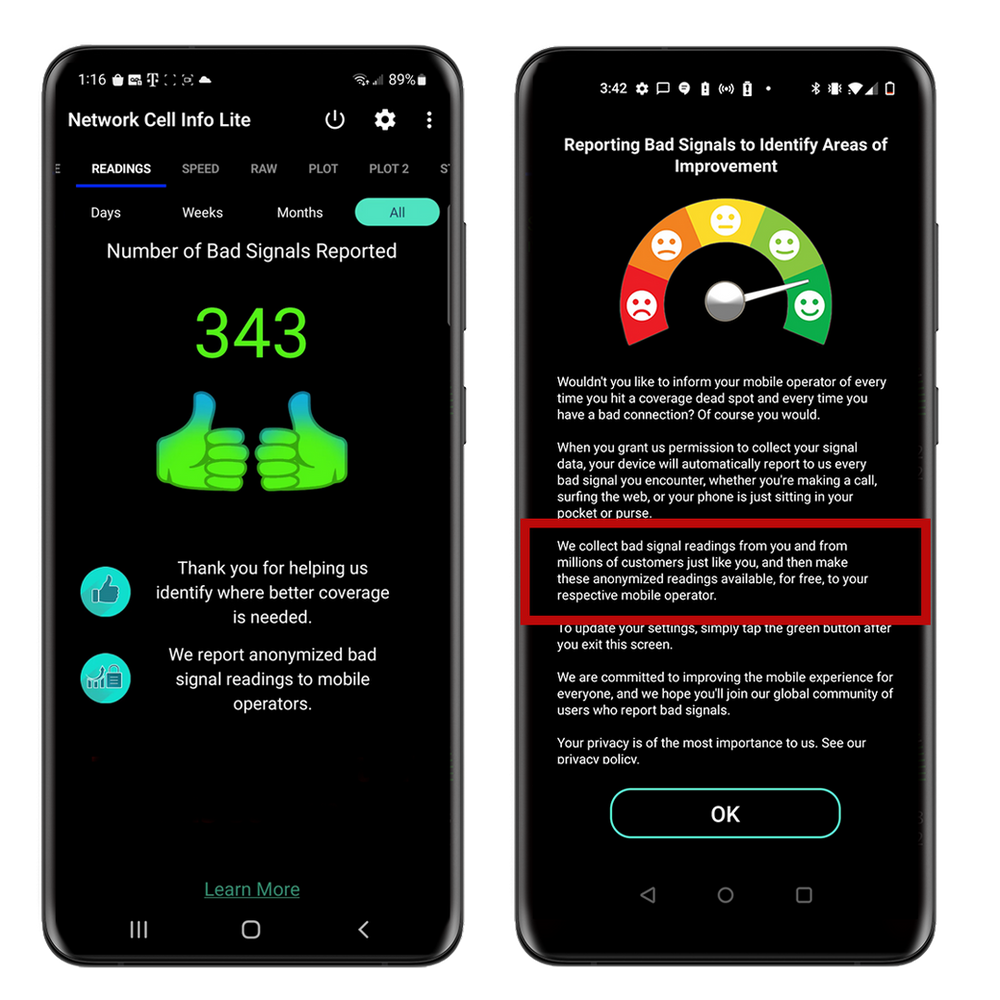
How does the Network Cell Info community help bridge the digital divide? We provide the No Signal Data back to Mobile Network Operators for free.
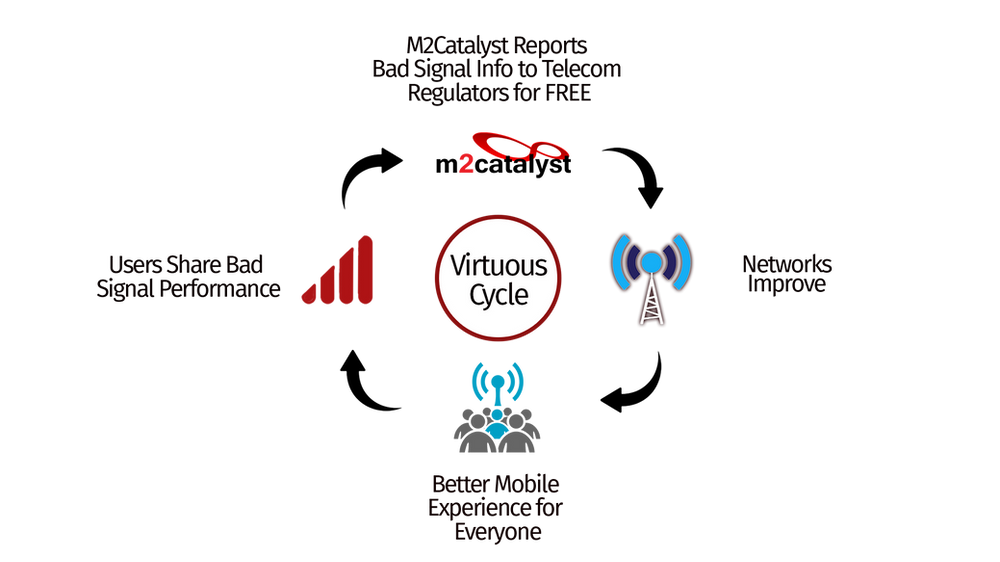
Download the free M2Catalyst app, Network Cell Info Lite , to submit network performance data in your area.

M2Catalyst reports the no-signal readings (dead zones) to MNOs for free. If you work for an MNO, please contact via our form at , www.m2catalyst.com/contact


Invite a Friend to Network Cell Info Lite

The more people using NCI Lite, the faster we can help improve mobile networks around the world. Please share our app with friends and family using one of the options below.

You might also like

By Joshua Shorter January 8, 2026
When it comes to mobile connectivity, coverage maps often look impressive on paper. Streets and highways light up with strong signals, giving the impression of blanket coverage. But step inside a busy airport terminal, a sprawling mall, or a corporate campus—and the story can change dramatically. Indoor connectivity remains one of the toughest challenges for mobile network operators. Crowds of people, thick walls, complex building layouts, and overlapping cell coverage all contribute to weak signal quality. For users, it means dropped calls, slow apps, and frustrating experiences. For operators and venue owners, it means missed opportunities. This is where M2Catalyst’s Crowd SiteIntel (CSI) delivers a fresh perspective—making indoor signal problems visible, quantifiable, and fixable. Indoor vs. Outdoor: How CSI Filters Signal Quality Traditional coverage studies don’t always distinguish between outdoor and indoor conditions. Yet, the difference is critical. With CSI’s indoor/outdoor filter, decision-makers can separate signal quality readings inside buildings from those collected outdoors. This allows operators to: Pinpoint specific structures where RSRP, RSRQ, or SINR degrade sharply Compare indoor vs. outdoor performance across the same area Quantify user experiences within malls, airports, train stations, and corporate campuses Instead of vague assumptions about indoor coverage, CSI provides polygon-level building insights—a powerful way to identify where customers struggle most. Identifying Coverage Gaps in Complex Indoor Environments Crowdsourced measurements from over 200 countries reveal consistent pain points: Airports: Even in some of the world’s best airports, terminals often have “shadow zones” where SINR drops dramatically. Travelers expecting seamless connectivity often get lag instead. Shopping Centers: Multi-floor malls with concrete cores and underground sections are notorious for signal gaps, especially in parking garages. Corporate Campuses: Even world-class offices experience poor indoor RSRP in conference halls, impacting collaboration and productivity. Hospitals & Healthcare Facilities: Thick walls, shielding materials, and sprawling layouts often block signals. Yet these are high-stakes environments where connectivity is essential for staff, patients, and visitors. Universities & Schools: Large campuses with multiple buildings often show poor indoor RSRP in lecture halls, libraries, and dormitories, impacting both staff and students. Sports Arenas & Event Venues: Stadiums and arenas pose extreme challenges due to user density, resulting in poor SINR and data congestion. Hotels & Resorts: Multi-floor layouts, basements, and conference areas often create blind spots—critical for business travelers and events. Transit Hubs: Subway stations and train depots frequently act as coverage blind spots By mapping these environments, CSI allows operators and infrastructure partners to prioritize upgrades where they matter most: high-traffic indoor venues where network demand peaks. Fixing Indoor Coverage: Small Cells, DAS, and Beyond The good news? Indoor coverage issues are solvable—if you know where to look. Armed with CSI data, RF engineers and planners can determine whether an area requires: Small Cells to boost coverage in targeted zones Distributed Antenna Systems (DAS) for large, complex buildings Wi-Fi Offloading strategies to support high user density Because CSI pinpoints problems down to the building polygon, operators can deploy infrastructure precisely—reducing wasted spend and improving ROI on network investments. A Win-Win for Enterprise Customers Solving indoor connectivity isn’t just a technical win—it’s a business win. Enterprise Sales Teams can use CSI insights to target B2B opportunities, approaching venue owners and corporate clients with clear data on their pain points. Venue Owners benefit by providing better customer experiences—stronger signal means longer dwell time, better tenant satisfaction, and more revenue. Operators gain by improving network quality in high-value locations, enhancing customer loyalty while reducing churn. Indoor connectivity has long been seen as a headache. With CSI, it becomes a competitive advantage. Conclusion As mobile usage shifts increasingly indoors, the ability to diagnose and solve indoor signal problems is no longer optional—it’s essential. Crowd SiteIntel puts building-level visibility into the hands of operators, engineers, and business teams alike. By mapping the world’s largest malls, airports, and campuses, CSI reveals the gaps that matter most—and empowers the industry to close them faster. In short, better insights mean better experiences. And nowhere is that more important than the places people spend the most time—indoors. Contact us today and discover how Crowd SiteIntel pinpoints in-building coverage gaps with polygon-level accuracy.
By Joshua Shorter August 28, 2025
Introduction: The Speed Bottleneck in Traditional RF Optimization Mobile network optimization is the domain of seasoned RF engineers—experts equipped with specialized tools and years of experience. These professionals perform site-by-site analysis, comb through performance data, and model coverage areas. While effective, this process is time-consuming, expensive, and often reactive. Today, the telecom industry is facing a new era of demands: faster rollouts, denser networks, and increasingly complex deployment environments. The traditional RF optimization model simply cannot keep up. This is where Crowd SiteIntel (CSI), M2Catalyst’s powerfulplatform, is redefining what’s possible for those looking to leverage AI. Expanding Access to Network Intelligence: Empowering More Teams Without Replacing RF Experts Crowd SiteIntel is designed to complement the expertise of RF professionals while expanding access to network insights across the organization. By putting AI-powered tools in the hands of planners, regulators, and business teams, RF engineers can focus on high-value tasks—without being pulled into every data request or early-stage analysis. With the ability to analyze over 1,000 sites per hour, CSI drastically reduces the time required for: Competitive benchmarking Small cell site planning Rural connectivity planning Coverage gap identification In-building network performance analysis Instead of requiring weeks of manual field testing or drive tests, users can access actionable insights within hours. The AI Advantage: Key Features Powering CSI Trillions of Data Points CSI aggregates and analyzes trillions of crowdsourced measurements from real user devices. These data include: RSRP, RSRQ, SINR Band/frequency PCI and eNodeB mappings Indoor vs. outdoor usage context Automated Site Analysis Using AI algorithms, CSI can rapidly: Map cell coverage by polygon or signal strength range Detect overlapping coverage and under-utilized sectors Rank sites by quality, usage, or customer experience impact S mart Filtering for Strategic Planning Users can quickly filter insights based on: Geography (custom polygon or radius) Indoor-only or outdoor-only signals Dead zones vs. fringe coverage First-seen/last-seen data for detecting outdated or inactive infrastructure Global Roaming and Partner Network Evaluation Beyond domestic planning, CSI offers insights into roaming experiences across 200+ countries, helping MNOs identify weak links in their partner ecosystems. Real-World Speed: How CSI Saves Time and Expands Visibility Crowd SiteIntel has been successfully used to evaluate thousands of cell sites across diverse regions, cutting analysis timelines from weeks to hours. Whether performing competitive benchmarking across an entire city within a few clicks or identifying dead zones in remote rural areas, CSI delivers a high-speed alternative to traditional drive testing. For example: Planners can scan thousands of square kilometers with polygon-level granularity Infrastructure teams can assess network load and performance using real-world, device-level data—without relying solely on field measurements Sales and marketing can pinpoint locations where network quality is already strong—ideal for promoting high-performance services or targeting B2B opportunities These time-saving capabilities empower teams across the organization to make faster, more confident decisions while allowing RF engineers to focus on complex optimization tasks. Unlocking New Users: Who Can Use These Powerful Tools? With CSI, network intelligence becomes accessible far beyond the engineering team. It empowers: Strategic Planners: Forecast where demand is outpacing supply and identify areas primed for expansion Government Regulators: Validate coverage claims to inform broadband subsidy decisions and ensure compliance with public funding initiatives like BEAD Sales & Marketing Teams: Promote services in strong-signal areas and support competitive differentiation Rural ISPs & WISPs: Pinpoint underserved locations and evaluate competitive network quality before entering new markets CSI can also support scraping and screening potential new entrants in a region—helping decision-makers monitor the evolving network landscape and respond to emerging competition faster. Rather than replacing RF engineers, CSI enhances their effectiveness by streamlining routine assessments and enabling cross-functional collaboration with data that’s accessible, trusted, and immediately actionable. From Reactive to Proactive: A New Paradigm for Optimization Traditionally, operators would wait for customer complaints, hire consultants, and deploy testing teams. CSI enables a proactive approach: Predict churn based on degrading signal quality Identify roaming partner issues before users do Pre-plan for seasonal load or special events This kind of forward-looking intelligence supports better investment decisions and ultimately improves customer experience. Conclusion: The Future of RF Optimization is Faster, Smarter, and More Accessible Crowd SiteIntel, M2Catalyst’s platform represents a turning point in telecom operations for those looking to leverage AI. It allows organizations to leapfrog legacy processes and gain immediate visibility into network performance. Whether you're an MNO, regulator, infrastructure provider, or analyst, you now have access to the same kind of insights RF engineers use—amplifying collaboration across your organization. With CSI, engineers and non-engineers alike can move faster, act smarter, and make better decisions together. With CSI, the data speaks for itself—and it speaks fast. Contact us for a demo of the Crowd SiteIntel platform today.
By Joshua Shorter April 1, 2025
Irvine, CA, [April 1st, 2025] – M2Catalyst, a global leader in mobile network analytics, has launched its latest Mobile Broadband Quality and Traffic Reports for the APAC region—delivering the insights telecom operators, regulators, and infrastructure companies need to supercharge network performance and bridge the digital divide. Why These Reports Matter We’ve identified over 720,000 locations across the Asia Pacific region where mobile subscribers are unconnected or under-connected when it comes to mobile broadband coverage. This is an indicator that millions of mobile consumers across the APAC region still struggle with unreliable connectivity, limiting access to remote work, education, and telemedicine. M2Catalyst’s reports pinpoint these gaps with unprecedented precision, equipping telecom leaders with the intelligence they need to enhance service reliability, expand coverage, and optimize network investments. Inside the Reports Mobile Quality Reports Identify connectivity weak spots—from urban congestion to rural dead zones. Enable telecom providers to strategically prioritize network improvements. Drive data-backed decision-making for regulators and infrastructure planners. Mobile Traffic Reports Reveal real-world usage trends across 2G, 3G, 4G, and 5G (Standalone & Non-Standalone). Support capacity planning and investment strategies for next-gen networks. Help operators stay ahead of shifting demand and evolving technologies. “Empowering telecom decision-makers with real, actionable data is at the heart of our mission,” said Mike Brough, CEO & Co-Founder of M2Catalyst. “With these reports, industry leaders can take immediate steps to expand high-quality mobile broadband and ensure every user—regardless of location—has reliable connectivity.” Who Needs These Reports? If you're involved in network optimization, infrastructure planning, or telecom investment in APAC, these reports are a must-have. They provide the data needed to maximize network performance, improve customer experience, and drive business growth. Get Exclusive Access Now 🚀 Explore the reports and take action today: APAC Region Mobile Quality Reports APAC Region Mobile Traffic Reports Countries Covered Australia India Indonesia Japan Malaysia New Zealand Philippines Singapore Sri Lanka Taiwan Thailand About M2Catalyst M2Catalyst is a global provider of mobile network insights, dedicated to supporting telecom operators, regulators, and infrastructure companies in optimizing network performance and enhancing digital access worldwide. 📩 For Media & Business Inquiries: Joshua Shorter Director of Marketing & Communications www.m2catalyst.com ✉️ jshorter@m2catalyst.com 📞 702-728-0089

Book a Service Today